Epoxy vs Polyurea vs Polyaspartic: What Is the Difference?
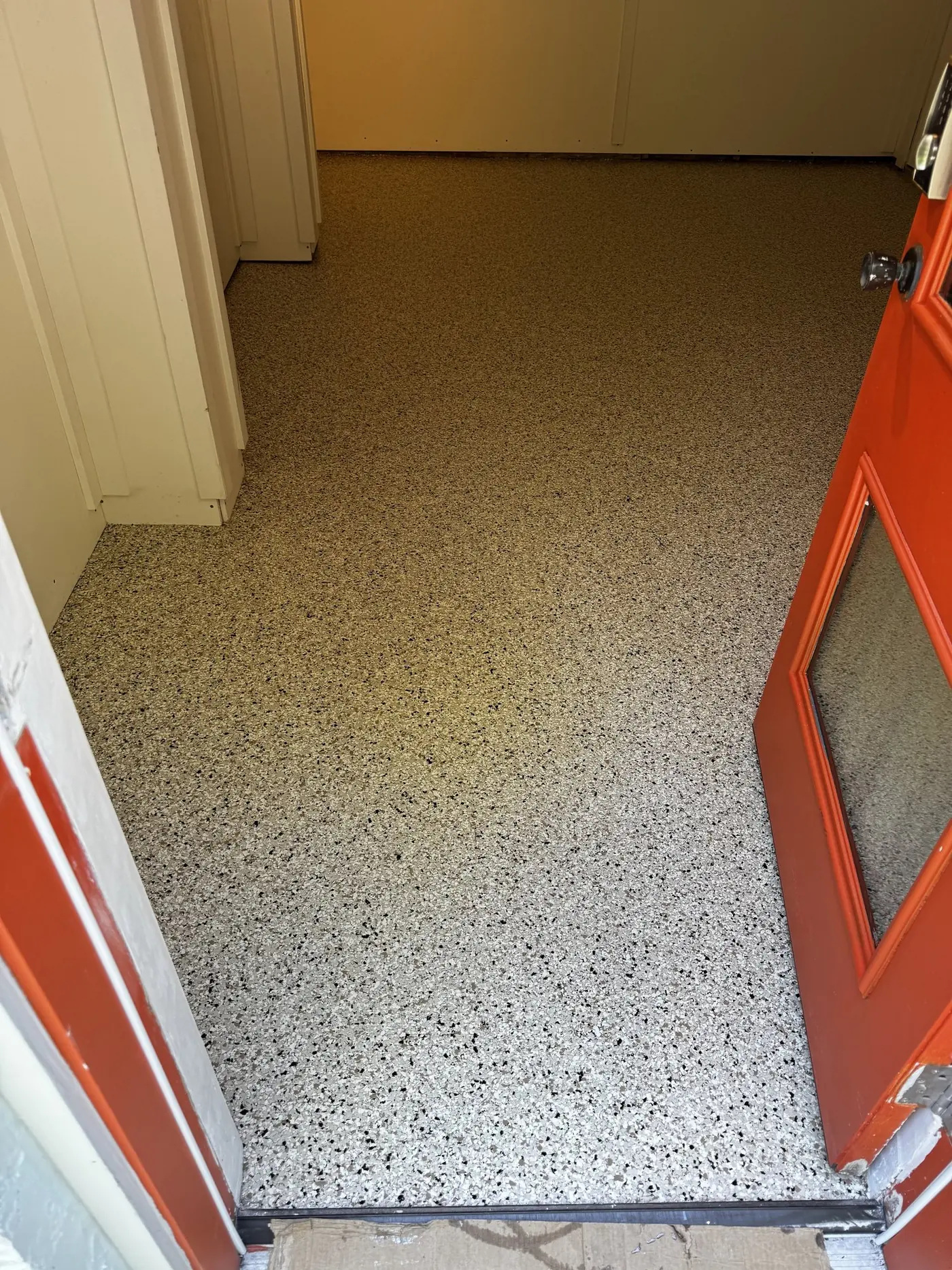
When you start shopping for a garage floor coating, you hear the same words over and over: epoxy, polyurea, polyaspartic, and "one day systems." Many homeowners assume they are all different names for the same thing. They are not, and choosing the wrong one can mean paying for a second floor down the road.
These products all fall under the category of resinous flooring, but their chemistry, performance and long term durability vary a lot. At Signature Coatings, we believe educated customers make better decisions, so here is how they compare.
What to look at when comparing floor coatings
Marketing usually focuses on one feature. How a floor actually performs depends on all of these working together:
- Adhesion to concrete
- Resistance to impact and abrasion
- Chemical resistance
- Moisture tolerance
- UV stability
- How it installs
- Long term durability
- Overall value
Epoxy coatings
Epoxy has been used for decades in commercial, industrial and residential floors, and it was once considered the standard for garages. Epoxy forms when an epoxy resin reacts with a curing agent, creating a hard protective surface.
Properly formulated professional epoxies can bond strongly to concrete and resist chemicals when they go over properly prepared concrete. That's why they're common in warehouses and commercial spaces.
But not all epoxies are created equal. Many homeowner grade products sold in retail stores have lower solids content and go on thinner, which means less durability.
Epoxy's limitations in a garage:
- It can yellow or amber in sunlight, depending on the formulation.
- It has a longer cure time.
- It is more sensitive to temperature and humidity during installation.
In Florida, where the garage door is often open and sun reaches the floor, that yellowing matters.
Polyurea coatings
Polyurea was originally developed for waterproofing and corrosion protection, in products like truck bed liners and tank linings.
It has become common in the garage floor industry partly because it costs less than premium polyaspartic. Some contractors use polyurea as a base coat to lower the cost of the system, then market the floor as a "polyurea/polyaspartic system."
Polyurea cures extremely fast. That speeds up a job, but it also shortens the working time, leaving less room to get complete coverage and a clean finish.
Traditional polyureas are aromatic, which means they are not UV stable and can discolor in sunlight. That's why polyurea is usually used as a primer or base coat, not as the final wear surface.
Polyaspartic coatings
Polyaspartics belong to the aliphatic family of polyurea coatings, which is very different from traditional aromatic polyurea. Their chemistry is UV stable while staying durable and flexible.
Polyaspartic can do every job in a floor system: primer, base coat, broadcast coat and topcoat. Its strengths:
- UV stability, so it resists yellowing
- Abrasion resistance
- Chemical resistance
- Strong adhesion to properly prepared concrete
- Fast return to service
- Color and gloss that hold up
That's why it's so well suited to Florida garages, where UV exposure is a constant concern.
Adhesion starts with prep
Adhesion is one of the biggest factors in how long a floor lasts, and it starts with the concrete, not the coating. Diamond grinding opens the surface of the slab so the coating can grab on and bond mechanically.
Most professionally formulated systems can bond well over properly prepared concrete. In many cases, failures blamed on the product were really caused by poor preparation, contamination or moisture in the slab. Read why concrete prep matters.
Impact resistance and flexibility
Garage floors take a beating from tires, dropped tools, storage and everyday use. Concrete also expands and contracts. Polyurea and polyaspartic coatings have some flexibility, which helps with impact resistance compared with more rigid materials. Many professional epoxies add ingredients to reduce brittleness too. The best floor balances hardness and flexibility.
Moisture in the slab
Moisture is one of the most common causes of floor coating failure. Concrete naturally holds moisture and salts, and as moisture moves up through the slab it can carry those salts to where the coating meets the concrete. Over time, that can weaken the bond.
Polyaspartics have excellent chemical resistance, but they are not designed to be moisture mitigation systems. When a slab has a serious moisture problem, specialty systems are used. That's one reason we check the concrete at every free estimate.
Upfront cost vs long term value
Entry level coatings often cut cost with lower quality resins, thinner coats or lower solids. Premium systems use better materials and more installation steps, so they cost more up front. A floor that lasts longer and keeps its looks can be the better value. Is polyaspartic too expensive?.
Questions to ask before you hire anyone
- What material is in each coat: epoxy, polyurea or polyaspartic?
- How many coats are included?
- Do you diamond grind the concrete?
- Is the topcoat UV stable?
- What does the warranty cover?
If a company can't clearly explain its system, that's a red flag.
Why Signature Coatings uses a full polyaspartic system
We install a three coat, four layer, 100% polyaspartic system. No epoxy and no standard polyurea. We have installed this same system for 18 years, because we believe it gives Florida garages the best mix of durability, appearance and UV stability. Our system includes:
- Diamond grinding of every slab, with cracks and blemishes repaired first
- A full broadcast decorative flake layer
- A UV stable clear polyaspartic topcoat
- A one day install: walk on it in as little as 1 hour, park within 24 hours
- A lifetime residential warranty against peeling and hot tire pickup
Even the best coating is only as good as the prep under it, which is why we never skip it.